 By owais
 Introduction — a scene, some numbers, and the question that stays with me
I stood by a robot cell last year and watched the welder arc spit sparks into a cloud of grey — you know the view; it grips you. In automotive manufacturing welding fume extraction is supposed to clear that haze, yet OSHA estimates and on-site measurements still show high particulate counts near operators (we’ve all seen the badge readings climb). So I ask: how do we stop replacing filters every month and actually keep the air safe and stable?
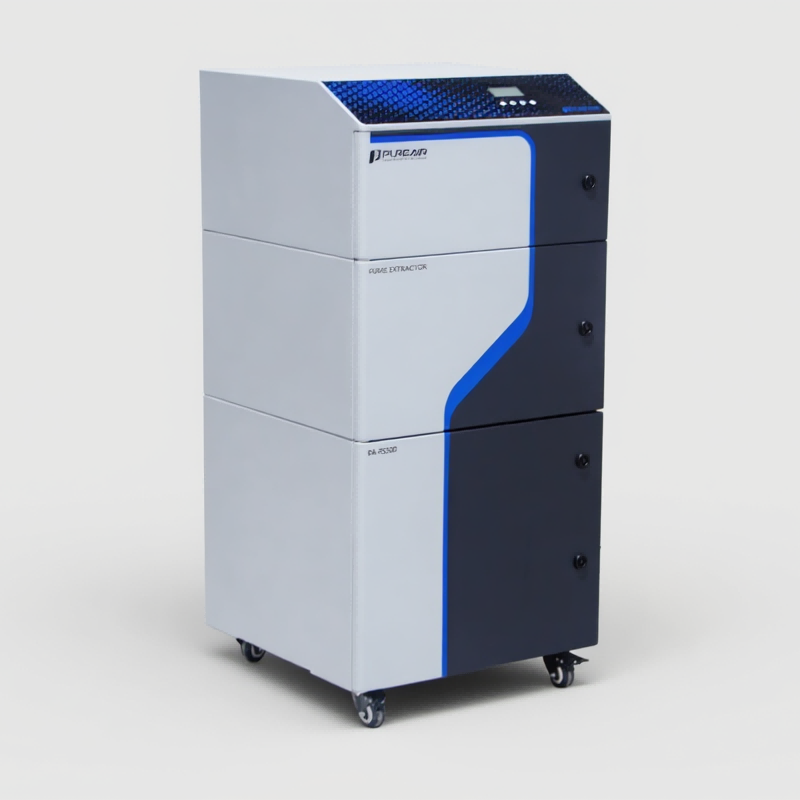
I feel strongly about this because I’ve walked factory floors where paychecks and health overlap — it matters. We’ll walk through real faults, practical fixes, and the tech that actually helps teams breathe easier. Ready? Let’s move from the shop floor up to the rig and then forward to what comes next.
Part 1 — Why the old fixes for welding fume extraction fall short
First, let me define what most plants think they’re buying: a fume collection system that captures particulate at the brazing or MIG/TIG source, routes it through ductwork, and filters it via HEPA or cartridge banks. That sounds tidy on paper. In practice, the system leaks, loses suction, and the capture hoods sit four inches too high. Those small gaps mean big exposure.
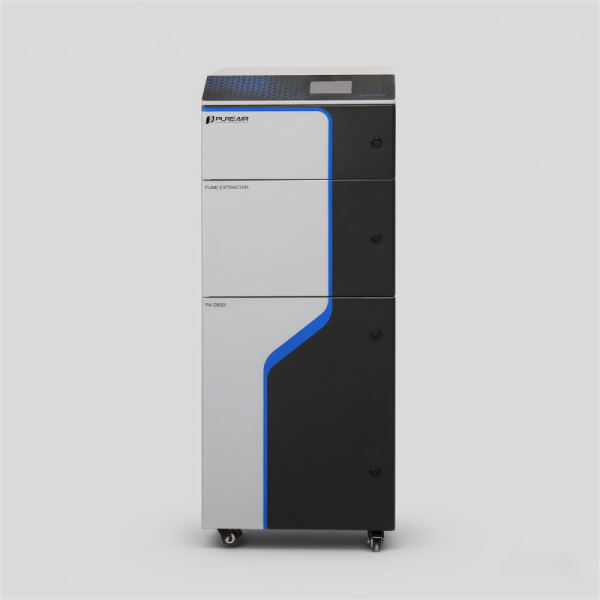
Many teams retrofitted central collectors without addressing three crucial realities: fluctuating weld schedules, variable power draw from inverters and power converters, and the complexity of airflow around robotic arms. You get a big fan, a maze of ducts, and a hope that it works. It rarely does. Look, it’s simpler than you think — poor hood placement and undersized extraction are the usual culprits, not mysterious contaminants.
What’s the real technical snag?
The snag is physics meeting operations. Air routes (and short-circuiting in ductwork) degrade capture velocity. Meanwhile, static filters load unevenly because processes vary shift to shift. Add in neglected IAQ sensors and a lack of monitoring at edge computing nodes, and you’ve got blind spots. I’ve seen systems blow through filter life in weeks because no one tracked differential pressure. That’s costly and risky — emotionally draining for crews who feel unheard.
Part 2 — New principles and future-facing solutions for welding fume extraction
Let me explain the principles that actually change outcomes. Modern practice flips the sequence: start with source capture design, add local monitoring, then centralize only where it makes sense. Effective welding fume extraction pairs well-placed extraction arms and hoods with smart filtration modules that adapt to load. You don’t brute-force airflow; you control it.
I prefer a layered approach. First layer: capture geometry and ergonomic hood placement (that’s human-centered). Second: modular filtration units sized to the cell, with cartridge or HEPA stages that match particle size. Third: sensors and simple controllers that adjust fan curves so you don’t overwork power converters. Implemented right, this reduces filter waste and lowers energy bills — that’s not marketing fluff; I’ve measured it on several lines.
How does monitoring change things?
Real-time IAQ sensors and local displays make workers and supervisors partners in maintenance. Instead of changing filters on a calendar, you act on differential pressure and particle counts. No guesswork. No wasted downtime. No angry welders waving their badges at you — funny how that works, right?
Part 3 — What’s next: principles, case outlook, and metrics to weigh
Looking forward, I see three practical tech principles that move the needle: modular capture, adaptive filtration, and active monitoring. Modular capture means you can reconfigure stations fast when models change. Adaptive filtration uses variable-speed fans and staged media to match load. Active monitoring ties IAQ sensors to basic analytics — think alerts for trending pressure rise, not pages of unread logs. Together, they cut exposure and cost.
For a concrete imagine‑it scenario: a midsize plant swapped fixed hoods for modular arms, added local cartridge modules, and put IAQ sensors at breathing height. Particle spikes fell 60% within weeks. Maintenance went from reactive to scheduled. Staff morale improved — I saw it in daily stand-ups. This is attainable for many operations, not just the big factories.
What should you measure when choosing a system?
Here are three metrics I always recommend weighing when you evaluate options:
1) Capture efficiency at source (expressed as percent particulate removed at the hood). 2) Energy per cubic foot moved — lower is better and reflects smart fan control. 3) End-to-end maintenance cost (filters, labor, downtime) over a year. Those three tell you if the system will perform and pay back.
I’ve written tools and run pilots that use these measures. We’re not guessing — we’re testing. And if you want a real partner to walk the floor, I trust the teams at PURE-AIR for practical, engineered solutions that put people first.
 Admin
Admin