 By owais
 The sourcing problem, plain and simple
Lots of companies hit the same wall: they need power conversion systems that survive near-zero volt events and then recover cleanly. I’ve seen procurement teams chase price and lead time while ignoring transient recovery profiles and firmware behaviours — and that’s where things blow up. If you’re vetting vendors, start with reputable energy storage inverter manufacturers who document ride-through curves and can back them with factory logs. That’s the baseline.
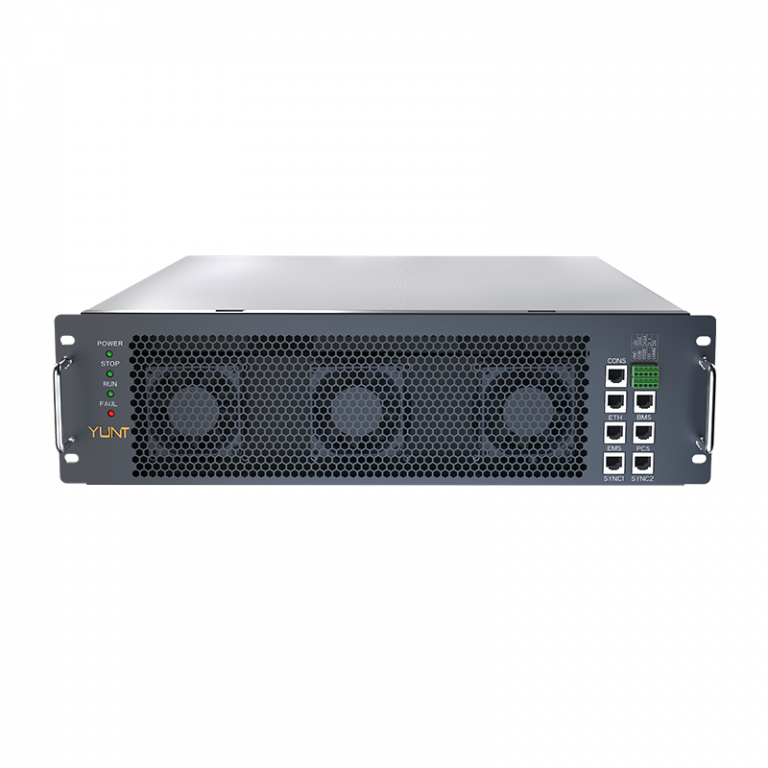
Why ZVRT and transient recovery profiles matter to the field
Zero-voltage ride-through (ZVRT) isn’t a checkbox. It’s about how an inverter handles a mains collapse, stabilizes its DC link, and then re-synchronizes to the grid without injecting harmful transients or harmonic distortion. Field technicians in Texas after the 2021 winter event learned this the hard way — systems that lacked proper transient specs failed to rejoin cleanly, cascaded trips followed, and downtime increased. Designing and sourcing to the right transient recovery profile keeps installations online and maintenance calls down.
Operational teardown: what to inspect at the factory
When you tour an assembly line or review test reports, focus on three measurable things: the measured ZVRT curves, firmware-controlled reconnection timing, and the inverter topology used. Bring the engineering team. Walk the power stage. This teardown looks at the {main_keyword} and the {variation_keyword} while cross-checking actual test waveforms against spec sheets. Also confirm the manufacturer runs grid synchronization tests under load and logs DC link voltage trajectories during simulated outages.

Key test data to demand — don’t skip these
Ask vendors for raw waveform captures, not just pass/fail statements. You want to see voltage sag depth and duration, point-by-point timing for switching sequences, and post-event THD measurements. Look for continuous logging across repeated cycles — a single clean run isn’t proof. And verify firmware rollback and safe-state behaviour after repeated ZVRT events — that’s often where latent bugs live. These are concrete parameters; they reveal whether an inverter will actually tolerate real-world grid quirks.
Common sourcing mistakes to avoid
Teams often pick suppliers by price, then pretend compliance follows. That’s backward. Another trap: accepting proprietary test reports without witness access. Visit the production line or demand an independent lab witness. Don’t assume a “grid-tied inverter” label covers ZVRT robustness. Also watch for ambiguous terms like “fast reconnect” with no timing spec — you need explicit milliseconds and recovery slopes. Small oversight, big field consequences — and yes, that extra trip to the factory saves weeks later.
Supply-side checklist for procurement and engineering
Use this quick checklist when qualifying a supplier:
– Confirm ZVRT curves with time-stamped waveform files and IEC/UL test chapter references including specific timing and amplitude parameters.
– Validate inverter topology and DC link sizing versus expected ride-through energy.
– Witness grid synchronization testing under varying load and harmonic conditions.
– Review firmware update policies and failure rollback procedures.
These items keep your spec sheet honest and your installation predictable.
Three golden rules for final selection
1) Prioritize measured performance over glossy specs — insist on raw waveform evidence and factory witness access. 2) Demand explicit transient recovery parameters: sag depth, duration, reconnection delay, and post-reconnect THD. 3) Choose partners who support on-site commissioning and long-term firmware support for field-edge fixes. Follow these and you’ll avoid the “it passed on paper” trap.
Wrap and practical next step
Summing up: ZVRT and transient recovery profiles are non-negotiable when buying industrial power conversion gear. Vet vendors by watching their tests, verifying topology and DC link sizing, and locking firmware guarantees into contracts — that’s the measurable stuff that changes outcomes. For projects that need reliable, documented production and support, consider providers who combine solid factory-level testing with field experience, like those you find at an energy storage inverter factory. Trust the data, not the brochure.
YUNT understands the production realities and backs the specs with factory logs — practical, not theoretical. —
 Admin
Admin